
Pre Acceptance Waste Audits: How Do They Work?
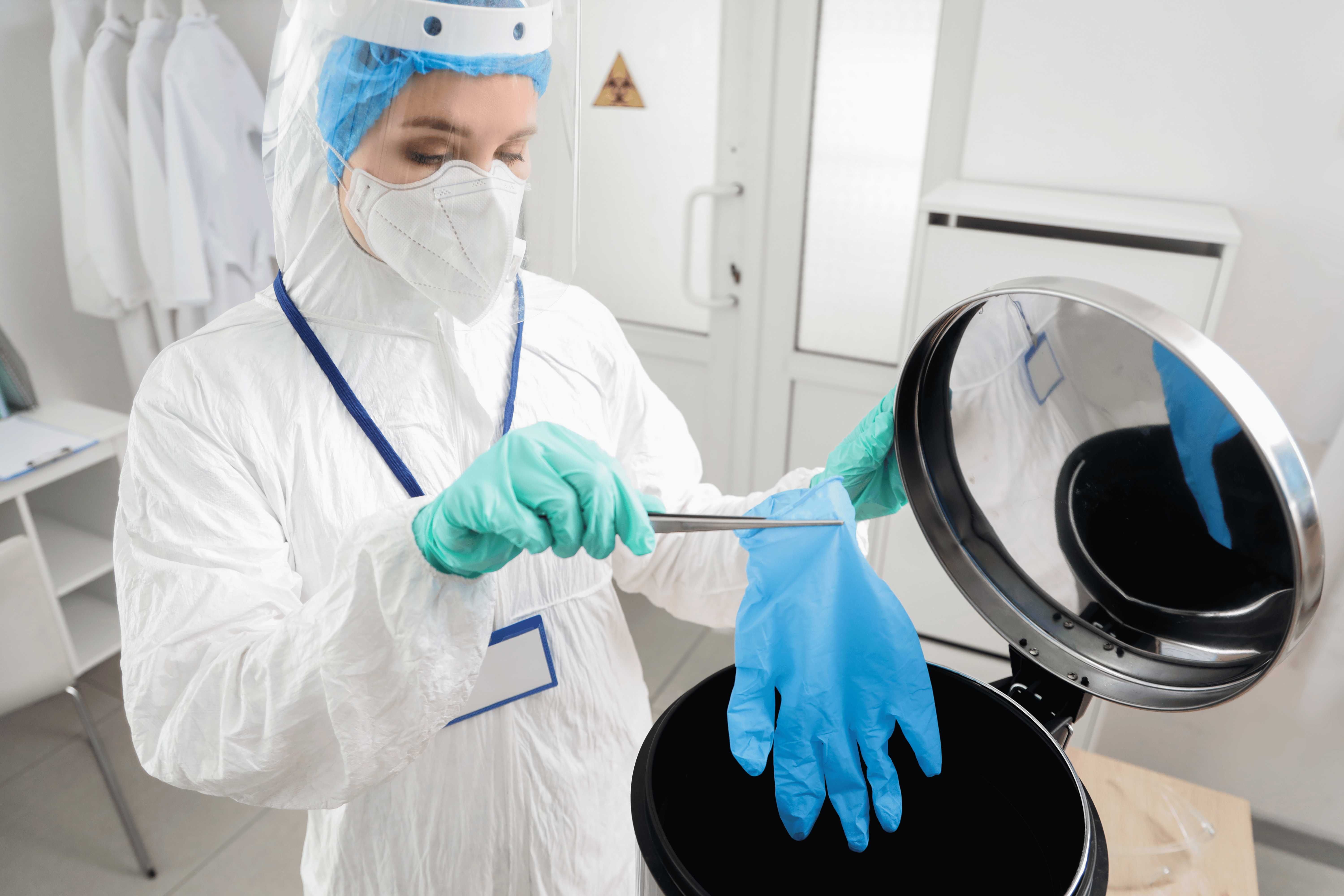
Managing clinical waste safely is a critical responsibility for healthcare facilities across the UK. A pre acceptance waste audit helps ensure that all waste is correctly classified, segregated, and documented before it leaves your premises. Whether you run a clinic, dental practice, or hospital, understanding how a pre acceptance audit works is essential for compliance, staff safety, and environmental protection.
In this guide, we’ll explore the process of a clinical waste audit, the types of waste that require auditing, and the steps your facility can take to stay fully compliant.
Discover Our Washroom Services
What is a Pre Acceptance Waste Audit for Clinical Waste?
A pre acceptance waste audit is a systematic review carried out before a waste management company accepts clinical waste from a healthcare facility. Its main purpose is to check that all waste is correctly segregated, labelled, and documented according to UK regulations.
During a clinical waste audit, auditors assess the type and composition of waste to ensure it meets legal and safety standards. This process helps prevent contamination, reduces regulatory risk, and ensures your facility handles waste in an environmentally responsible way.
Pre acceptance audits are particularly important for facilities that generate high-risk or infectious waste, such as sharps, blood-contaminated materials, and pharmaceutical waste. Facilities can address potential compliance gaps early, protecting both staff and patients while maintaining proper waste management practices.
Types of Waste That Require Pre Acceptance Audits
Certain types of clinical waste require a pre acceptance waste audit to ensure safe handling and regulatory compliance. Understanding these categories helps facilities prepare waste correctly and meet audit requirements.
Infectious Waste
Waste contaminated with pathogens that could cause disease. Examples include:
- Blood-soaked dressings and swabs
- Laboratory cultures and specimens
- Contaminated surgical gloves and gowns
Sharps Waste
Items that can puncture or cut the skin, posing a high risk of injury and infection. Examples include:
- Needles and syringes
- Scalpels and blades
- Broken glass from medical procedures
Pharmaceutical and Cytotoxic Waste
Medicines and chemical compounds that require careful disposal to avoid environmental harm or patient/staff exposure:
- Expired or unused medicines
- Cytotoxic and cytostatic drugs
- Certain chemical reagents from laboratories
Chemical and Laboratory Waste
Hazardous substances that may cause injury or environmental damage if not handled properly:
- Laboratory solvents and reagents
- Cleaning agents with corrosive properties
- Small quantities of hazardous chemicals from diagnostic procedures
Colour Coding and Labelling
Correct colour coding for waste simplifies audits and ensures compliance:
- Yellow bags/containers for infectious clinical waste
- Sharps containers for needles and blades
- Purple or black containers for pharmaceutical or cytotoxic waste
Requirements and Compliance Responsibilities
Meeting the legal and safety requirements of a pre acceptance waste audit is a shared responsibility between the waste producer and the waste contractor. Clear processes and accurate records help ensure that all clinical waste is managed in line with UK regulations.
Responsibilities of the Waste Producer
Healthcare providers, including GP surgeries, dental practices, and hospitals, are responsible for:
- Correct segregation of clinical waste using approved colour coding
- Secure storage of waste in appropriate containers
- Accurate labelling of all waste streams
- Completion of waste transfer and consignment documentation
- Training staff in safe handling and segregation procedures
Responsibilities of the Waste Management Contractor
Waste contractors must confirm that all waste presented for collection meets acceptance criteria, including:
- Verifying waste classification and packaging
- Reviewing documentation for completeness and accuracy
- Checking that containers are compliant and correctly labelled
- Ensuring transport and disposal routes meet regulatory standards
Regulatory Compliance
Pre acceptance audits support compliance with key UK regulations and guidance, including:
- Duty of Care requirements for waste producers
- Hazardous waste regulations
- Environmental and health and safety standards for clinical waste
- Record keeping and traceability obligations
How Pre Acceptance Waste Audits Work
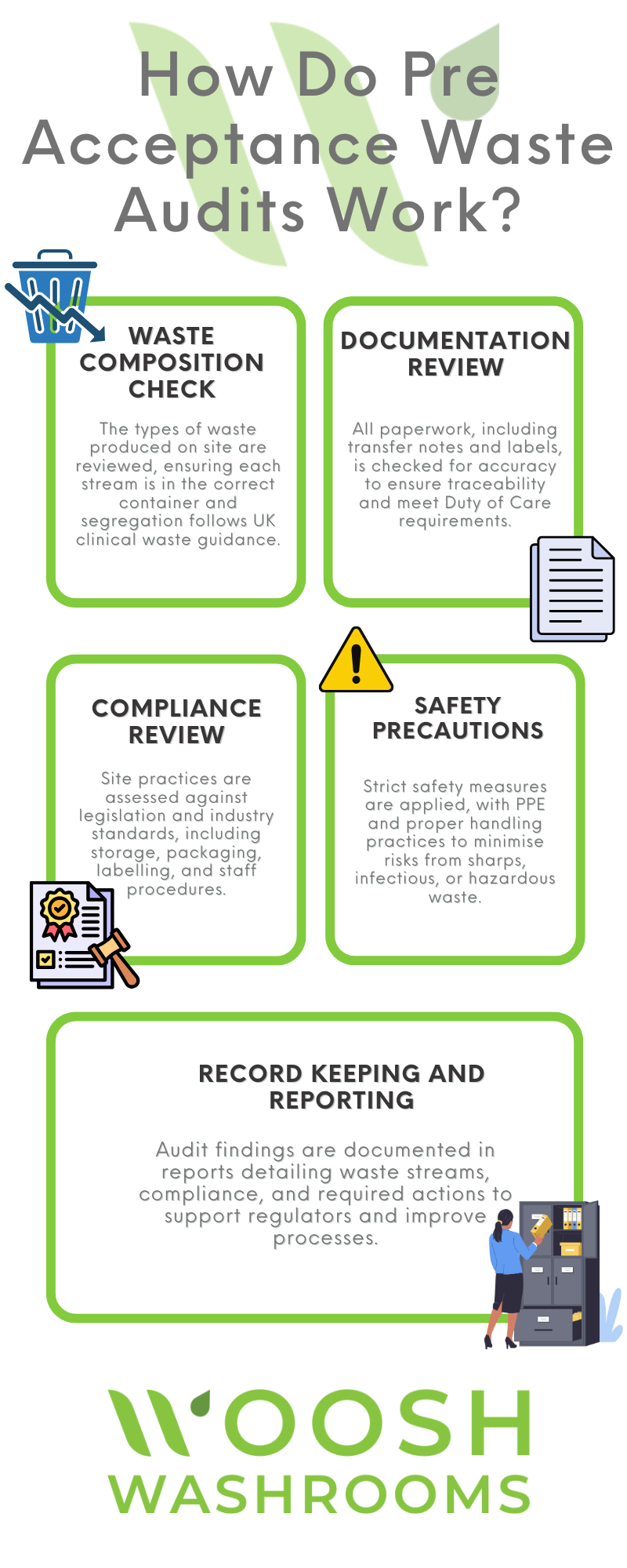
A pre acceptance waste audit follows a structured review process to ensure that clinical waste is correctly classified, safely handled, and fully compliant before collection and disposal.
Waste Composition Check
A pre acceptance waste audit begins with a review of the types of waste produced on site. This includes assessing infectious waste, sharps, pharmaceutical waste, and chemical waste, and confirming that each stream is placed in the correct colour coded container. Segregation is checked to ensure incompatible or prohibited items are not mixed and that waste classification aligns with UK clinical waste guidance.
Documentation Review
All supporting paperwork is then examined to confirm accuracy and traceability. Waste transfer notes, consignment notes, and container labels are reviewed to ensure that waste descriptions, quantities, and classifications are correct. This stage supports Duty of Care requirements and ensures a clear audit trail from production through to final treatment or disposal.
Compliance Review
The audit also assesses whether site practices meet regulatory and industry standards. Storage conditions, packaging, labelling, and internal procedures are reviewed against current legislation and best practice for clinical waste management. Evidence of staff training and written waste procedures may form part of this review.
Safety Precautions
Strict safety controls are applied throughout the clinical waste audit. Appropriate personal protective equipment is used, and handling practices are checked to reduce the risk of injury or exposure when dealing with sharps, infectious materials, and hazardous substances.
Record Keeping and Reporting
All findings from the pre acceptance waste audit are formally documented. Audit reports record waste streams, compliance status, and any required actions, providing evidence for regulators and supporting ongoing improvement in waste management processes.
Benefits of Conducting Pre Acceptance Waste Audits
Conducting regular pre acceptance waste audits provides significant advantages for healthcare facilities, ensuring safety, compliance, and efficiency in clinical waste management. These audits help facilities maintain high standards and avoid potential risks associated with incorrect waste handling.
Regulatory Compliance
A primary benefit of pre acceptance audits is supporting compliance with UK regulations. Regular audits confirm that waste is correctly segregated, labelled, and documented, reducing the risk of penalties and ensuring adherence to Duty of Care and hazardous waste requirements.
Safety for Staff and Patients
Pre acceptance audits enhance safety by ensuring that infectious materials, sharps, and hazardous waste are managed appropriately. Staff are protected from potential injuries and exposure, while patients benefit from safer, cleaner facilities.
Environmental Responsibility
Proper audits minimise environmental impact by confirming that waste is disposed of in line with legal and environmental standards. Correct segregation and handling prevent contamination, reduce landfill use, and support sustainable waste management practices.
Operational Efficiency
Audits streamline waste management processes by identifying gaps or inefficiencies before collection. Facilities can address issues early, improve segregation practices, and ensure that waste contractors can accept waste without delays or rejections.
Evidence and Accountability
Pre acceptance audits create a clear record of compliance and waste management practices. Detailed audit reports serve as evidence for regulators, inspections, and internal reviews, providing accountability and supporting continuous improvement.
How Often Should Pre Acceptance Waste Audits Be Completed?
The frequency of pre acceptance waste audits depends on the volume and type of clinical waste produced, as well as the facility’s regulatory requirements and internal policies. Facilities that generate higher-risk or larger quantities of infectious, sharps, or pharmaceutical waste may require audits more frequently, while smaller practices with lower-risk waste can operate on a less frequent schedule.
Many healthcare providers in the UK perform audits quarterly or annually to ensure ongoing compliance, monitor staff adherence to procedures, and maintain accurate records. In addition, audits may be conducted following any significant changes in waste management processes, the introduction of new waste streams, or updates to relevant legislation. Regular audits help facilities maintain safe practices, prevent regulatory issues, and continuously improve the efficiency and accuracy of their clinical waste management.
Key Takeaways for Pre Acceptance Waste Audits
- Pre acceptance waste audits ensure clinical waste is correctly segregated, labelled, and documented before collection, reducing compliance and safety risks.
- These audits are essential for high-risk waste streams, including infectious waste, sharps, pharmaceutical, and chemical waste.
- Both healthcare providers and waste management contractors share responsibility for meeting audit and regulatory requirements.
- The audit process includes waste composition checks, documentation review, compliance assessment, safety precautions, and thorough record keeping.
- Regular audits support regulatory compliance, enhance staff and patient safety, improve operational efficiency, and demonstrate accountability.
- Frequency of audits varies depending on waste volume and risk, with many UK facilities performing them quarterly or annually.
- Proper colour coding, staff training, and accurate records are critical to successful clinical waste management.
Frequently Asked Questions
How do you conduct a waste audit?
Conducting a waste audit involves systematically reviewing the types, quantities, and handling of waste at a facility. A pre acceptance waste audit starts with assessing waste streams such as infectious, sharps, pharmaceutical, and chemical waste, checking segregation and colour coding. Documentation, including waste transfer notes and labelling, is reviewed for accuracy, while compliance with UK regulations and safety procedures is verified. The audit concludes with a report detailing findings, any non-compliance issues, and recommendations for improvement.
What is the waste acceptance procedure?
The waste acceptance procedure is the process a waste management company follows to ensure all incoming clinical waste meets legal and safety standards. It includes verifying waste classification, reviewing documentation, checking container labelling and integrity, and confirming that waste storage and transport meet regulatory requirements. This procedure ensures that only compliant and correctly prepared waste is collected, reducing environmental risks and maintaining safety for staff and patients.
What is a pre audit checklist?
A pre audit checklist is a preparatory tool used by healthcare facilities to ensure they are ready for a pre acceptance waste audit. It typically includes reviewing waste segregation, container colour coding, labelling accuracy, documentation, and staff training records. The checklist helps identify gaps or issues before the audit, ensuring compliance with UK regulations and streamlining the audit process for both the facility and the waste management contractor.
Keep Clinical Waste Management Compliant with Woosh Washrooms
Understanding how pre acceptance waste audits work is key for safe and compliant clinical waste handling in healthcare settings. Proper segregation, labelling, and documentation reduce risk, protect staff and patients, and ensure your facility meets UK regulations.
Woosh Washrooms provides a range of professional washroom solutions and specialist disposal products that support hygienic waste management. From sharps bins and offensive waste disposal to high‑quality sanitary bins and washroom services, their solutions make it easier to maintain safe, compliant, and efficient waste practices.
Get in touch with Woosh Washrooms today to discuss your washroom and waste management needs and find the right products and services for your facility. Contact us today.
Discover Our Washroom Services
Related Articles
- Hazardous Substances & Waste Management in Hospitals
- Hospital Hygiene Guidelines in the UK
- Your Ultimate Guide to Commercial Hygiene