
12 Everyday Habits that Spread Germs
Germs are everywhere, and most of the time we spread them without even noticing. Simple, everyday habits at home, at work, and out in public can all contribute to the spread of germs, making it easy for us to end up sharing germs with the people around us. In this article, we’ll look at the small behaviours that make a big difference and how a few changes can help create cleaner, healthier spaces.
How the Spread of Germs Happens
Germs, including bacteria, viruses, and fungi, are microscopic organisms that live almost everywhere, on surfaces, in the air, and even on our own bodies. They spread through three main routes.
Direct Contact
This happens when you touch another person, such as shaking hands, hugging, or caring for someone who is unwell. Germs can transfer from skin to skin or from contaminated surfaces onto your hands and then into your body when you touch your face, mouth, or eyes.
Indirect Contact
Germs can survive on surfaces for hours or even days. High touch items like keyboards, door handles, remote controls, mobile phones, and kitchen sponges can become home to bacteria and viruses. When you touch these surfaces and then touch your face or food, you give germs an easy way to enter your body.
Airborne Transmission
Tiny droplets released when someone coughs, sneezes, or even talks can carry germs through the air. Some of these particles can linger on nearby surfaces or be breathed in by others. Flushing a toilet without closing the lid can also release fine droplets into the air that contain germs.
Understanding these routes makes it easier to see how everyday behaviour contributes to the spread of germs and why simple hygiene habits can make such a big difference.
Why We Share Germs So Easily
We share germs so easily because many of our daily routines involve frequent contact with people, surfaces, and objects without us realising the risk. Our hands touch door handles, phones, keyboards, and handrails throughout the day, then often move straight to our face, food, or personal items. This creates a simple pathway for germs to move from surface to skin and into the body.
Modern life also puts us in close proximity to others, particularly in offices, public transport, shops, and shared kitchens. Coughing, sneezing, and even talking can release droplets that settle on nearby surfaces or are inhaled by people close by, helping germs travel quickly in enclosed spaces.
Because these actions are part of normal behaviour, we rarely think about them. Over time, this makes it easy to spread the germs and unknowingly pass everyday germs on to colleagues, family members, and the wider public.
Everyday Habits that Cause the Spread of Germs
Many of the ways we spread germs come from small, routine actions we barely think about. From personal hygiene to how we use shared spaces and devices, these everyday habits can create constant opportunities for germs to move from surfaces to hands and then into the body.
Understanding where these risks come from is the first step in reducing the spread of germs and limiting how often we end up sharing germs with others.
Not Washing Hands Regularly
Hands are one of the main ways germs travel because they are constantly in contact with surfaces, people, and shared objects throughout the day. When you touch door handles, phones, keyboards, money, or public transport rails, bacteria and viruses can easily transfer onto your skin. If hands are not washed regularly, these germs can then move to your face, food, or other people, making it much easier to spread the germs and contribute to the wider spread of germs in homes, workplaces, and public spaces.
Proper handwashing with soap and warm water breaks down and removes many of these microorganisms, physically washing them away from the skin. Skipping this simple step allows everyday germs to build up and increases the chance of sharing germs through handshakes, food preparation, and contact with commonly used surfaces.
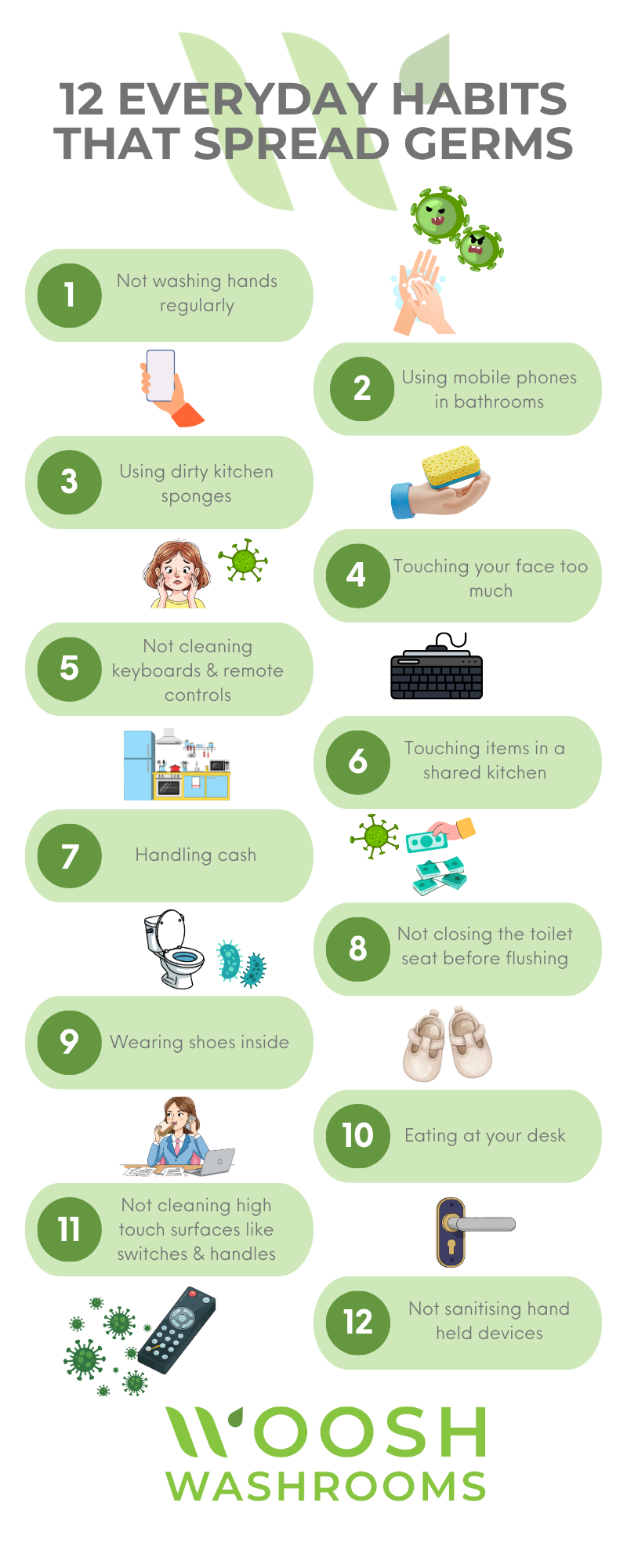
Using Mobile Phones in Bathrooms
Mobile phones are one of the most frequently touched items we carry, and they can easily become a hotspot for germs. Using your phone in the bathroom exposes it to bacteria and viruses that may be present on surfaces or in the air. Once contaminated, touching your phone and then your face, mouth, or food can contribute to the spread of germs throughout your home, workplace, or social circle.
Even though it may not seem obvious, phones are rarely cleaned as often as they should be, allowing germs to build up over time. Regularly wiping down your device with an appropriate disinfectant and avoiding phone use in bathrooms can greatly reduce the risk of sharing germs through this everyday habit.
Using Dirty Kitchen Sponges
Kitchen sponges are one of the dirtiest items in a household, and they can quickly become breeding grounds for bacteria, mould, and other germs. Every time a sponge is used to wipe down surfaces, clean dishes, or soak up spills, it picks up germs and can spread them across your kitchen if not cleaned or replaced regularly. This makes it easy for everyday germs to move from the sponge to countertops, utensils, and food.
Using a dirty sponge not only contaminates surfaces but also increases the risk of sharing germs with family members or anyone you prepare food for. To reduce this risk, replace kitchen sponges frequently, wash them in hot water or the dishwasher, and consider using separate sponges for dishes and surfaces. This simple habit can significantly limit the spread of germs in your kitchen.
Touching Your Face Too Much
Our hands come into contact with countless surfaces throughout the day, picking up germs along the way. Touching your face, whether rubbing your eyes, scratching your nose, or resting your chin on your hands, provides an easy pathway for everyday germs to enter your body. This habit is one of the fastest ways of sharing germs without even realising it.
Reducing how often you touch your face, along with regular handwashing, can significantly lower the chances of spreading germs and protect both your health and the health of those around you. Being mindful of this unconscious behaviour is a simple but powerful way to limit the spread of germs.
Not Cleaning Keyboards and Remote Controls
Keyboards, remote controls, and other frequently used devices are often overlooked when it comes to cleaning, making them hotspots for germs. Every time these items are touched, germs from hands can accumulate on their surfaces. If they are not cleaned regularly, it becomes easy for everyday germs to move from one person to another, helping spread the germs in shared spaces like offices, homes, and public areas.
Wiping down these high touch devices with a disinfectant regularly can reduce contamination and make a noticeable difference in limiting the spread of germs. Small steps like this help prevent germs from circulating and reduce the risk of infections.
Touching Items in a Shared Kitchen
Shared kitchens, whether at home, in offices, or in communal spaces, are full of high touch surfaces that can carry germs. Items like fridge handles, coffee machines, utensils, and cupboard doors are touched by multiple people each day, creating an easy way for everyday germs to move from person to person. This makes it simple to spread the germs without even noticing.
To reduce the risk, it helps to clean and disinfect shared surfaces regularly and encourage everyone using the space to wash their hands before handling communal items. Simple habits like these can make a big difference in limiting the spread of germs in shared environments.
Handling Cash
Cash passes through many hands every day and can carry a surprising number of germs. Studies have shown that notes and coins can harbour bacteria and viruses for hours or even days, creating a hidden pathway for germs to travel. Each time you handle money, germs can transfer onto your hands, and if you then touch your face, food, or personal items, you are sharing germs without even realising it.
To reduce the risk, it is a good idea to use contactless payments whenever possible, wash your hands thoroughly after handling cash, and avoid touching your face immediately afterwards. These small steps can make a big difference in limiting the spread of everyday germs and protecting both your health and the health of others around you.
Not Closing the Toilet Seat Lid Before Flushing
Flushing the toilet without closing the lid can release tiny droplets of water into the air, a phenomenon known as “toilet plume.” These droplets can carry bacteria and viruses from the bowl and settle on nearby surfaces such as sinks, counters, or even toothbrushes, making it easy for everyday germs to spread throughout the bathroom.
Leaving the lid open also increases the risk of sharing germs with others who use the same bathroom. Closing the toilet seat before flushing and regularly cleaning bathroom surfaces can significantly reduce the spread of germs and help maintain a cleaner, healthier environment.
Wearing Shoes Inside
Shoes can carry dirt, bacteria, and other germs from outdoors into your home, office, or shared spaces. Walking around without removing shoes spreads these particles across floors and carpets, increasing the risk that germs will come into contact with hands, surfaces, or even food. This everyday habit contributes to the spread of germs and plays a role in the wider spread of germs in indoor environments.
Creating a habit of removing shoes before entering indoor spaces and using entrance mats that can be cleaned regularly helps trap dirt and germs at the door. Combined with mats or rugs inside that are cleaned often, this can significantly reduce the spread of germs throughout your home or workplace.
Eating at Your Desk
Eating at your desk is a convenient habit, but it can also be a major way to spread germs. Keyboards, mouse devices, and desk surfaces are often covered in bacteria from hands, food crumbs, and spills. Every time you eat without cleaning your workspace first, you risk transferring everyday germs from these surfaces onto your hands and into your mouth.
This habit not only increases your own exposure but also contributes to sharing germs with others in shared office spaces. Taking the time to wipe down your desk before eating, washing your hands, and keeping food separate from work surfaces can help reduce the spread of germs and maintain a cleaner, healthier workspace.
Not Cleaning High Touch Surfaces Like Switches & Handles
Light switches, door handles, and other high touch surfaces are some of the most overlooked areas when it comes to cleaning, yet they can carry a large number of germs. Every time someone touches these surfaces, bacteria and viruses can transfer onto their hands, making it easy to spread the germs throughout a home, office, or shared space.
Regularly wiping down these frequently touched areas with disinfectant and encouraging everyone in the space to wash their hands can greatly reduce the risk of spreading germs. Simple routines like this help prevent everyday germs from accumulating and limit the opportunities to spread the germs to others.
Not Sanitising Hand Held Devices
Phones, tablets, and other hand held devices are constantly touched throughout the day, making them prime carriers for everyday germs. When these devices are not regularly cleaned, bacteria and viruses can build up on their surfaces. Every time you handle your device and then touch your face, food, or other items, you are helping to share germs without even realising it.
Regularly sanitising hand held devices with appropriate wipes or disinfectants can significantly reduce the risk of spreading germs. Keeping these items clean is a simple but effective way to limit the spread of germs in both personal and shared spaces.
Key Takeaways for Sharing Germs
- Everyday germs are spread through direct contact, contaminated surfaces, and airborne droplets, often without us noticing.
- Small, routine habits like not washing hands, touching your face, or using shared devices make it easy to share germs with others.
- High touch surfaces such as keyboards, remote controls, door handles, and kitchen sponges can harbour bacteria and viruses if not cleaned regularly.
- Using mobile phones in bathrooms, handling cash, eating at your desk, and walking around with shoes indoors are common habits that contribute to the spread of germs.
- Simple actions such as regular handwashing, sanitising hand held devices, cleaning shared surfaces, and closing the toilet seat before flushing can significantly reduce the spread of germs.
- Being mindful of everyday behaviours and encouraging good hygiene in home, office, and shared spaces helps protect your health and limits the transmission of germs to others.
Frequently Asked Questions
What everyday item has the most germs?
One of the everyday items with the most germs is your mobile phone. Studies show that phones carry more bacteria than many common household surfaces because they are touched constantly and rarely cleaned. Keyboards, kitchen sponges, and remote controls are also high-risk items, making it easy to share germs throughout your home or workspace.
How many germs are we exposed to daily?
On average, people come into contact with millions of germs every day through surfaces, objects, and person-to-person contact. This includes bacteria, viruses, and fungi that can live on your hands, food, devices, and household surfaces. While most are harmless, frequent exposure without proper hygiene increases the risk of spreading germs and falling ill.
What are the most common household germs?
The most common household germs include bacteria such as E. coli and Salmonella, viruses like cold and flu viruses, and fungi such as mold spores. These germs often accumulate on high-touch surfaces, kitchen sponges, and bathrooms, making them easy to spread if hygiene practices are not followed.
What is the germiest place in your house?
Bathrooms and kitchens are generally the germiest places in the home. Toilet seats, flush handles, sinks, sponges, and cutting boards are hotspots where germs gather and can be transferred to your hands, food, and other surfaces, increasing the chance of sharing germs with family members.
Keep Your Spaces Cleaner with Woosh Washrooms
Everyday germs spread more easily than most people realise, and small habits can have a big impact on health and hygiene. Simple actions like regular handwashing, cleaning high-touch surfaces, and sanitising devices help reduce the spread of germs and keep homes, offices, and shared spaces safer.
At Woosh Washrooms, we provide professional washroom and cleaning services that support cleaner, healthier environments. Get in touch with us today to find out how we can help maintain hygienic spaces and limit the spread of germs.
Related Articles
- How to Perfect Your Hand Washing Technique
- How Hygienic Are Hand Dryers?
- Practising Good Personal Hygiene in the Workplace