
What Happens If Your Business Is Non-Compliant with Washroom Laws?
Keeping your business washrooms compliant is essential for the safety of staff, the comfort of customers, and your company’s reputation. Understanding restroom laws and following proper hygiene and waste management practices helps you avoid fines, inspections, or legal issues.
This guide explains the key regulations, waste handling procedures, and hygiene controls every UK business should follow, along with practical steps to stay compliant and protect your business.
Table of Contents:
- What Are Washroom Laws in the UK?
- Waste Management in Washrooms
- Hygiene Controls Every Business Must Follow
- Consequences of Non-Compliance: Fines, Prosecution & Inspections
- Why Compliance Matters for Your Business, Staff & Customers
- How to Stay Compliant with UK Washroom Laws
What Are Washroom Laws in the UK?
Businesses in the UK must comply with a range of washroom laws to ensure safety, hygiene, and legal compliance. These laws cover everything from the facilities you provide to how waste is managed and hygiene standards are maintained.
Relevant Laws, Acts, and Regulations
Several key regulations set the standards for washroom management in the UK:
- Health and Safety at Work Act 1974 - requires employers to provide a safe and hygienic workplace, including clean washroom facilities.
- Workplace (Health, Safety and Welfare) Regulations 1992 - outlines the minimum requirements for toilets, washrooms, and hygiene arrangements.
- Environmental Protection Act 1990 - governs the proper disposal of waste, including washroom waste.
- Waste Management Licensing Regulations - ensures businesses handle, store, and dispose of waste correctly, including recycling and hazardous materials.
Restroom Laws Businesses Must Follow
UK regulations mean businesses are legally responsible for:
- Providing sufficient and accessible toilet facilities for staff and visitors.
- Ensuring regular cleaning and sanitisation of washrooms.
- Correctly managing and disposing of waste, including sanitary products and other special washroom waste.
Following these laws isn’t just about avoiding fines, it also helps maintain a safe, hygienic environment that protects both staff and customers.
Waste Management in Washrooms
Managing washroom waste properly is essential for keeping your business compliant with UK regulations and maintaining a hygienic environment for staff and visitors. Failing to handle waste correctly can lead to health risks, legal penalties, and damage to your reputation.
Understanding Different Types of Waste
Not all waste is treated the same, so it’s important to know how to classify what your washroom produces:
- General waste - everyday items like paper towels and packaging that aren’t hazardous.
- Recyclable waste - materials such as cardboard, plastics, and certain packaging that should be separated for recycling.
- Sanitary and special waste - items like nappies, sanitary products, or other potentially hazardous materials that need to be disposed of safely in designated bins.
Proper classification helps you stay on the right side of environmental and health regulations.
Dealing With Missed Collections
Even with regular schedules, waste collections can occasionally be missed. When this happens, your business is still responsible for keeping washrooms clean and safe. Some practical steps include:
- Temporary storage - use sealed containers to prevent odours and contamination.
- Contacting your provider - report missed collections promptly to get them resolved.
- Keeping records - log waste types, quantities, and collection dates to show compliance during inspections.
Taking a proactive approach to waste management not only keeps your facilities hygienic but also demonstrates that your business takes compliance seriously.
Hygiene Controls Every Business Must Follow
Maintaining high hygiene standards in washrooms is essential for any UK business. Not only does it keep staff and visitors safe, but it also ensures compliance with restroom laws and helps avoid fines or reputational damage. Implementing clear routines and monitoring practices can make this process much easier and more effective.
Cleaning and Sanitisation
Maintaining clean washrooms is a legal requirement in the UK and vital for staff and visitor safety. Toilets, sinks, floors, and high-touch surfaces should be disinfected daily. Using effective and safe cleaning products ensures hygiene standards are met without damaging surfaces.
Staff Training
Employees responsible for cleaning should be trained on proper techniques and schedules. Regular training ensures they understand how to maintain hygiene consistently and spot potential issues before they become a problem.
Monitoring Compliance
It’s important to check that hygiene practices are being followed. Using simple audits, checklists, or inspections helps businesses maintain high standards. Assigning responsibility to specific staff members ensures accountability and quick resolution of any problems.
Professional Support
Partnering with a specialist washroom service can simplify compliance. Professionals provide regular cleaning, restocking, and hygiene monitoring, ensuring your facilities meet all legal requirements and stay safe for everyone.
Consequences of Non-Compliance: Fines, Prosecution & Inspections
Failing to meet UK washroom laws can have serious consequences. Non-compliance not only risks legal action but can also create health hazards, disrupt operations, and damage your business reputation. Understanding the potential outcomes highlights the importance of staying compliant.
Fines and Legal Action
Businesses that do not follow hygiene and waste management regulations may face fines or prosecution. The severity depends on the nature and frequency of the breach.
Key points:
- Minor breaches, such as missed waste collections, can result in smaller fines.
- Serious or repeated violations, like unsafe facilities or unhygienic conditions, can lead to larger penalties or legal proceedings.
- Prosecution may be initiated by local authorities if issues are not resolved promptly.
Inspections and Audits
Regulatory bodies, including environmental health officers, conduct inspections to check compliance. Inspections may be scheduled or triggered by complaints.
Key points:
- Failed inspections can lead to follow-up visits and stricter monitoring.
- Businesses may be required to take corrective actions within a set timeframe.
- Records of cleaning, waste handling, and staff training are often reviewed during audits.
Impact on Reputation and Operations
Non-compliance can affect how staff and customers perceive your business. Poor hygiene or missed collections can lead to complaints and negative publicity.
Key points:
- Staff may feel unsafe or dissatisfied working in unhygienic conditions.
- Customers may avoid businesses with visibly poorly maintained washrooms.
- Negative reviews or media coverage can have long-term consequences for your brand.
Taking compliance seriously helps prevent these outcomes, protects everyone who uses your facilities, and keeps your business operating smoothly.
Why Compliance Matters for Your Business, Staff & Customers
Following washroom laws in the UK isn’t just about avoiding fines. Compliance plays a key role in protecting your staff, ensuring a positive experience for customers, and safeguarding your business reputation. It also shows that your organisation takes health, safety, and hygiene seriously.
Some of the main benefits of staying compliant include:
- Staff wellbeing - clean and hygienic facilities reduce the risk of illness and create a safer working environment.
- Customer confidence - visitors are more likely to trust and return to a business that maintains high hygiene standards.
- Legal protection - staying compliant minimises the risk of fines, prosecution, or failed inspections.
- Reputation management - good hygiene practices support a professional image and prevent negative reviews or public complaints.
- Operational efficiency - consistent waste management and cleaning routines prevent disruptions caused by missed collections or health issues.
Prioritising compliance ensures your business runs smoothly while protecting the people who use your facilities and reinforcing a trustworthy reputation.
How to Stay Compliant with UK Washroom Laws
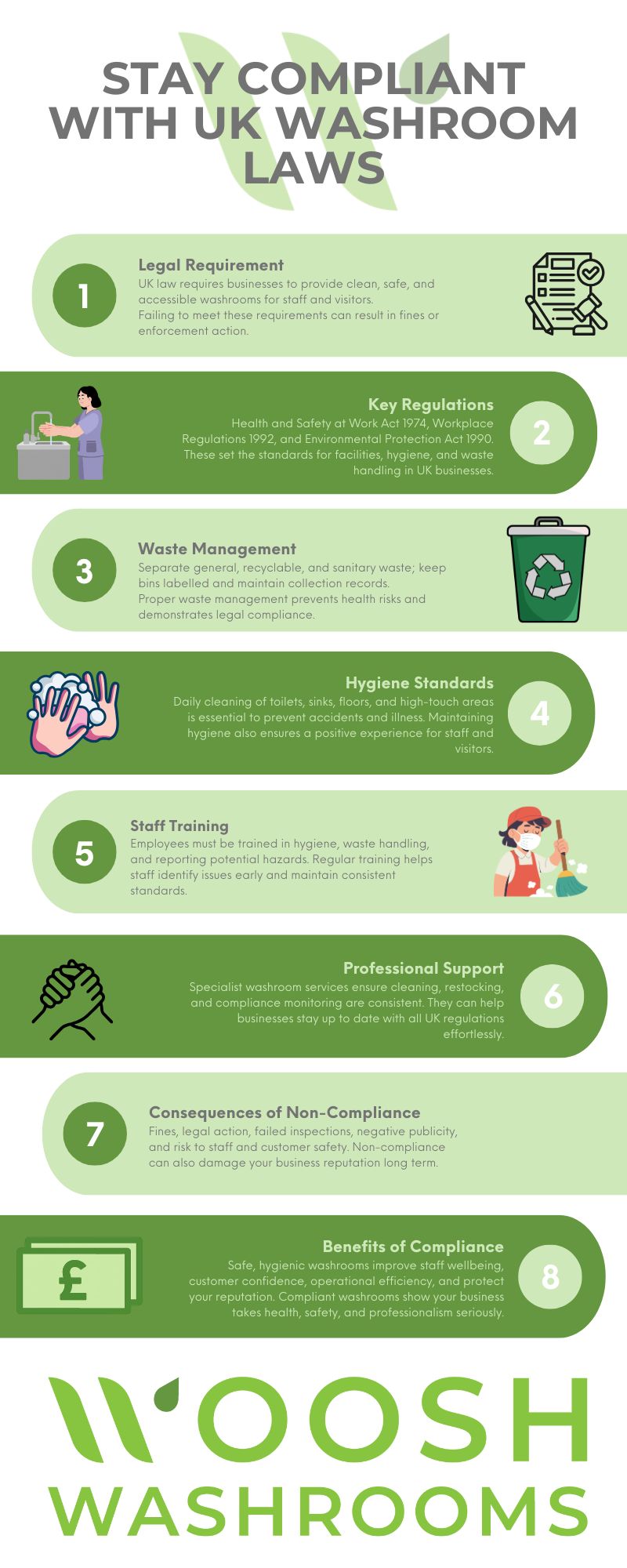
Maintaining compliance with UK washroom regulations protects staff, visitors, and your business reputation. Clear routines, proper training, and professional support make it easier to meet legal requirements and maintain high hygiene standards.
Effective Waste Management
Proper classification and handling of washroom waste is essential to stay compliant. General waste, recyclable materials, and sanitary or special waste must be separated and disposed of appropriately.
Key action points:
- Use clearly labelled bins for each type of waste.
- Schedule regular collections to avoid overflow or unpleasant odours.
- Keep accurate records of waste types and collection dates.
- Ensure special or hazardous waste is stored and disposed of according to regulations.
Correct waste management reduces the risk of fines and shows regulators that your business handles hygiene responsibly.
Regular Cleaning Routines
Washrooms should be cleaned thoroughly every day to maintain hygiene and safety. Toilets, sinks, floors, and high-touch areas such as door handles and taps require disinfecting.
Key action points:
- Implement daily cleaning schedules for all washroom areas.
- Use approved cleaning products that are effective against germs but safe for surfaces.
- Conduct regular spot checks or audits to ensure cleaning standards are maintained.
Consistent cleaning protects staff and visitors while demonstrating compliance during inspections.
Staff Training
Employees involved in washroom maintenance need clear guidance on hygiene and safety procedures. Training ensures they can maintain facilities effectively and recognise potential hazards.
Key action points:
- Provide training on cleaning techniques, waste handling, and health and safety procedures.
- Reinforce standards with refresher sessions or updates when regulations change.
- Encourage staff to report any issues or breaches immediately.
Well-trained staff help prevent problems before they escalate, keeping your business compliant and facilities safe.
Professional Washroom Services
Partnering with a specialist provider simplifies compliance and ensures high hygiene standards are maintained consistently.
Key action points:
- Use a professional service like Woosh Washrooms for regular cleaning, restocking, and waste management.
- Choose providers that stay up to date with UK laws and hygiene regulations.
- Monitor their performance with occasional audits or feedback from staff and visitors.
Professional support reduces risk, saves time, and ensures your facilities remain safe, hygienic, and legally compliant.
Key Takeaways for Waste Management Law in the UK
- Compliance with washroom laws protects staff, visitors, and your business reputation.
- Proper waste management includes correctly classifying general, recyclable, and sanitary waste, keeping bins labelled, and maintaining collection records.
- Daily cleaning and disinfecting of toilets, sinks, floors, and high-touch areas is essential for hygiene and legal compliance.
- Staff training ensures maintenance is consistent, hazards are identified early, and hygiene standards are upheld.
- Professional washroom services can simplify compliance by handling cleaning, restocking, and waste management while staying up to date with UK regulations.
- Non-compliance can result in fines, legal action, failed inspections, and negative impacts on staff morale, customer confidence, and business reputation.
- Monitoring routines, record-keeping, and proactive maintenance help prevent issues and demonstrate compliance during audits.
FAQs
Can a business run without toilets?
No, a business cannot operate without providing toilet facilities. UK workplace regulations require employers to offer accessible, hygienic toilets for staff and, where appropriate, for visitors. Failing to provide washrooms can lead to fines, inspections, and legal action under health and safety law.
What is the law regarding toilets in the workplace?
The Workplace (Health, Safety and Welfare) Regulations 1992 set out clear rules for toilets in UK workplaces. Employers must provide a sufficient number of toilets, ensure they are clean, well-lit, ventilated, and supplied with soap and sanitary facilities. Compliance is monitored by environmental health officers during inspections.
How many toilets are required for 50 staff?
For 50 employees, the minimum provision is typically two toilets for men and two for women, though this may vary depending on workplace conditions and the number of shifts. Employers must ensure facilities are clean, safe, and regularly maintained.
What are the penalties for not following waste management law in the UK?
Penalties vary depending on the severity of the breach. Minor infractions, such as missed collections or poor segregation, can result in fines, while serious or repeated violations can lead to prosecution. Maintaining records of waste handling and using approved disposal methods helps demonstrate compliance.
Do restroom laws apply to small businesses?
Yes, all UK businesses, regardless of size, must comply with restroom laws. Even small offices must provide adequate facilities for staff, maintain hygiene standards, and manage waste correctly. Non-compliance can still result in fines, inspections, or reputational damage.
Ensure Compliance and Hygienic Washrooms with Woosh Washrooms
Maintaining compliance with UK washroom laws protects your staff, visitors, and business reputation while avoiding fines, inspections, or legal action. From effective waste management to hygiene controls and staff training, every step plays a vital role in keeping your facilities safe and professional.
Woosh Washrooms can help your business stay fully compliant with all restroom regulations, offering expert cleaning, waste management, and maintenance services tailored to your needs. Ensure your washrooms meet the highest hygiene standards and remain inspection-ready.
Get in touch today to discuss how Woosh Washrooms can support your business.