
Duty of Care Regulations for Washroom Managers

For UK washroom managers, understanding duty of care regulations 2011 isn’t just good practice, it’s a legal requirement. The way you handle sanitary waste and other washroom by-products is governed by strict rules, including the duty of care act sanitary waste provisions and the special waste regulations 2011. Failure to comply can lead to fines, reputational damage, and health risks for staff and visitors.
At Woosh Washrooms, we help facilities managers, schools, and businesses stay on the right side of the law with reliable, eco-conscious washroom services. This blog breaks down everything you need to know about these regulations, your responsibilities, and practical ways to implement best practice.
Whether you manage a single-site washroom or oversee facilities across the UK, this guide will help you stay compliant and protect your organisation’s reputation.
Table of Contents
- What Are Duty of Care Waste Regulations 2011?
- Understanding the Duty of Care Act for Sanitary Waste
- Special Waste Regulations 2011: What Washroom Managers Need to Know
- Why Compliance Matters: Risks and Penalties
- How to Manage Sanitary Waste Correctly
- Partnering with Licensed Waste Carriers
- Record Keeping and Documentation Best Practices
- Environmental Considerations and Sustainable Waste Management
- Staff Training and Communication Strategies
- Common Compliance Mistakes to Avoid
- Internal and External Resources for Further Guidance
What Are Duty of Care Waste Regulations 2011?
The duty of care waste regulations 2011 set out how businesses must manage and dispose of waste safely from creation to final treatment. In the UK, every organisation producing waste, whether it’s paper towels or sanitary products, has a legal responsibility to ensure it is handled without harming the environment or human health.
Under these regulations, washroom managers must:
- Store waste securely in suitable containers.
- Ensure waste is transferred to an authorised person.
- Provide a waste transfer note for every handover.
- Prevent leaks, spills, or unauthorised access.
Failure to meet these obligations can result in Environment Agency enforcement action.
Understanding the Duty of Care Act for Sanitary Waste
Sanitary waste, including nappies, feminine hygiene products, and incontinence pads, is classified as offensive waste under UK law. The duty of care act sanitary waste ensures that this waste is collected and disposed of properly to prevent health hazards and odours.
Why Sanitary Waste Needs Special Handling
- It can carry pathogens, posing infection risks.
- Improper disposal can block plumbing or contaminate water systems.
- It creates an unpleasant environment for users and staff.
For businesses, working with an experienced washroom service provider like Woosh Washrooms sanitary waste solutions ensures compliance and protects your reputation.
Special Waste Regulations 2011: What Washroom Managers Need to Know
The special waste regulations 2011 apply to hazardous or complex waste streams, including some washroom chemicals or contaminated cleaning materials. While not all washroom waste is classed as “special,” managers must know how to identify and handle it.
Key points:
- Special waste must be accompanied by a consignment note.
- Storage and transport must meet strict guidelines.
- Only authorised facilities may accept special waste.
If your washrooms use cleaning agents or materials that could be classed as special waste, consult the UK Government guidance on hazardous waste
Why Compliance Matters: Risks and Penalties
Ignoring your duty of care can have serious consequences:
- Fines and legal action - Local authorities and the Environment Agency can issue penalties.
- Reputational damage - Customers and staff may lose confidence.
- Health and safety risks - Improper disposal can cause infection or slips.
- Compliance isn’t just about ticking boxes - it protects your business, the public, and the environment.
How to Manage Sanitary Waste Correctly
Effective sanitary waste management involves several steps:
1. Install appropriate bins - Use pedal-operated, lined bins in every cubicle.
2. Segregate waste - Keep sanitary waste separate from general waste.
3. Arrange regular collections - Schedule pickups with a licensed provider.
4. Maintain hygiene - Clean and sanitise bins after every collection.
At Woosh Washrooms, we offer hygienic sanitary bins and servicing tailored to your needs, ensuring a professional image and legal compliance.
Partnering with Licensed Waste Carriers
Always confirm that your waste carrier is registered with the Environment Agency. Ask for their registration number and check it on the official register
Working with unlicensed carriers can leave you liable if waste is dumped illegally. A reputable provider like Woosh Washrooms handles all documentation and ensures waste is disposed of responsibly.
Record Keeping and Documentation Best Practices
You must keep waste transfer notes and consignment notes for at least two years (or three for hazardous waste). These records prove your compliance during inspections.
Best practices include:
- Maintaining organised digital or physical records
- Scheduling regular audits of your waste management process.
- Including waste documentation in staff training.
Environmental Considerations and Sustainable Waste Management
Duty of care isn’t just about legality, it’s also about environmental stewardship. UK businesses are under increasing pressure to reduce landfill waste and carbon emissions.
Ways to improve sustainability:
- Use biodegradable sanitary bags.
- Work with providers offering waste-to-energy solutions.
- Educate staff about recycling and reduction initiatives.
Woosh Washrooms is committed to eco-friendly washroom solutions, helping clients reduce their environmental footprint while remaining compliant.
Staff Training and Communication Strategies
Even the best policies fail without proper staff awareness. Train your cleaning teams and facilities staff to:
- Recognise different waste categories.
- Handle and store waste safely.
- Complete transfer notes accurately.
- Report issues such as damaged bins or missed collections.
Regular refreshers and clear signage in staff areas can prevent costly mistakes.
Common Compliance Mistakes to Avoid
- Using domestic bins for sanitary waste - These are not secure or hygienic.
- Failing to check carrier licences - Leaving you liable for improper disposal.
- Neglecting documentation - Missing paperwork can lead to fines.
- Overfilling bins - Causes leaks and odour issues.
Avoiding these pitfalls saves time, money, and reputational harm.
Internal and External Resources for Further Guidance
Internal Links (Woosh Washrooms):
Sanitary Waste Disposal Services
External Resources:
UK Government: Duty of Care Waste Code of Practice
Environment Agency: Waste Carrier Registration
Health and Safety Executive: Waste Management
Key Takeaways for Duty of Care Regulations
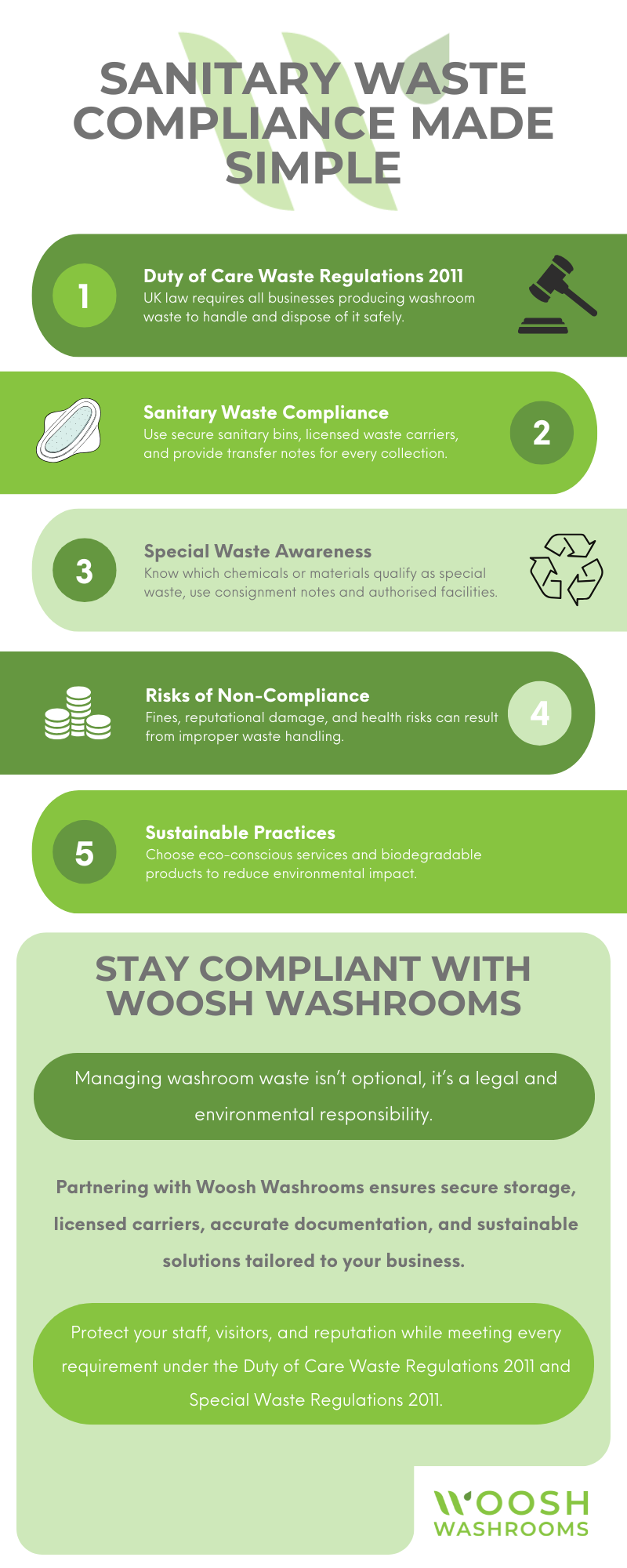
- The duty of care waste regulations 2011 require secure storage, authorised carriers, and transfer notes.
- Sanitary waste must be handled under the duty of care act sanitary waste provisions to prevent health risks.
- Some washroom waste may fall under special waste regulations 2011, know how to identify and manage it.
- Non-compliance risks fines, reputational harm, and safety issues.
- Partnering with a trusted provider like Woosh Washrooms simplifies compliance and improves sustainability.
Frequently Asked Questions
1. What is the duty of care for sanitary waste?
The duty of care for sanitary waste is a legal obligation requiring businesses to store, transfer, and dispose of sanitary products safely and hygienically. This includes using licensed waste carriers and keeping accurate records.
2. Do the duty of care waste regulations 2011 apply to small businesses?
Yes. Any UK organisation producing waste, regardless of size, must comply. Even small offices with a single washroom must follow the same standards.
3. What happens if I fail to comply with special waste regulations 2011?
Failing to comply can result in enforcement action, fines, and reputational damage. Using a registered provider and keeping records protects your business.
Stay Compliant with Woosh Washrooms
Understanding and following the duty of care regulations for washroom managers isn’t optional, it’s essential for legal compliance, hygiene, and customer confidence. From sanitary waste to special waste regulations 2011, the rules are there to protect people and the planet.
By partnering with Woosh Washrooms, you gain a trusted ally who ensures your washrooms remain safe, compliant, and eco-friendly. Ready to simplify your waste management process?
Contact us today to discuss tailored solutions for your business.
Related Articles
How to Boost Your Restaurant’s Hygiene Rating
Dust Control - The Importance of Washroom Mats